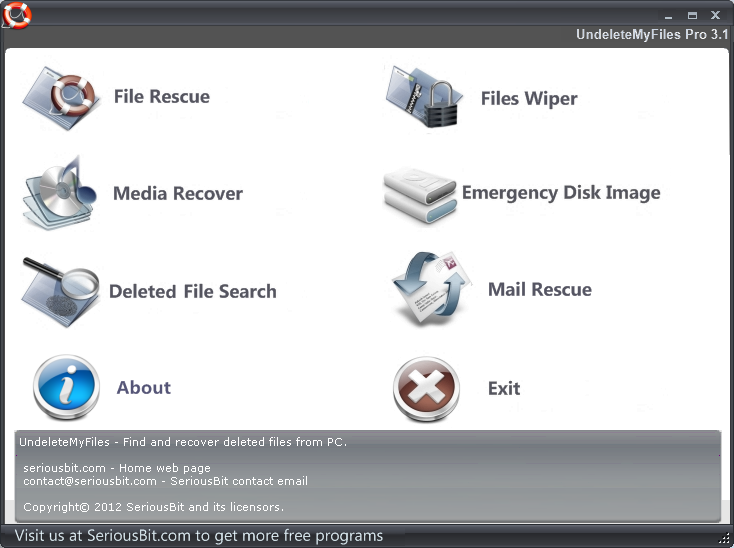
Main Window
Contains a list of all available tools
iFast-22 (also referred to as ifast22) is a specialized software tool primarily associated with bypassing Apple's iCloud Activation Lock on older iOS devices. While it is often discussed in tech communities as a "fast and intuitive" solution for device recovery, it is critical to distinguish between official recovery methods and third-party bypass tools. 1. Official Activation Lock Removal
Before using third-party software like iFast-22, you should always attempt official Apple recovery methods, as these are permanent and secure.
Previous Owner Method: If the device was bought used, the original owner can remotely remove the lock by signing in at iCloud.com/find, selecting the device, and clicking Remove This Device.
Apple Support Request: If you have documentation proving you are the original owner (e.g., a receipt with the serial number), you can start an Activation Lock Support Request directly with Apple.
Password Reset: If you own the account but forgot the credentials, use the iForgot tool to reset your password and gain access. 2. Using iFast-22 (Trial Version)
The iFast-22 Trial Version is often used as a proof-of-concept to evaluate whether the tool can communicate with your specific device before purchasing a full license.
Onboarding: The software typically includes a "guided onboarding" process to minimize setup time.
Compatibility: Most legitimate bypass tools require an A11 chip (iPhone X) or older and may require the device to be in DFU mode.
Features: The trial version generally allows for interface evaluation and basic workflow testing but may have core bypass features locked behind a full version. 3. Risks and Ethical Considerations
Using third-party bypass tools like iFast-22 comes with significant risks that you should weigh carefully: How to remove Activation Lock - Apple Support
It seems like you're referring to a specific paper titled "iFAST22". However, without more context, I'm not sure what you're looking for. Could you please provide more details or clarify your question about this paper? Are you looking for information on its content, authors, or perhaps where to find it?
🛡️ The Myth of the "Magic" Unlock: A Close Look at iFast22
If you have ever purchased a second-hand iPhone, iPad, or MacBook only to find it bricked by an iCloud Activation Lock, you know the immediate feeling of panic. In your search for a quick fix, you likely stumbled upon iFast22.
Marketed aggressively across YouTube and social media as a "one-click" savior for locked Apple devices, the software promises to fully bypass security protocols on any iOS version or Mac hardware. However, pulling back the curtain reveals a highly controversial landscape filled with security risks, scam warnings, and tech community backlash. 🔍 What is iFast22? ifast22
iFast22 is a third-party software that claims to remove Apple's native iCloud Activation Lock and Mobile Device Management (MDM) profiles. Its operators promote the tool as a universal solution capable of servicing:
All iOS devices including the latest iPhone and iPad models. Apple Watches spanning multiple generations. Intel and Apple Silicon (M-series) Macs.
Promoters on YouTube upload highly edited tutorials claiming that users simply need to plug in their bricked device, pay a fee, and let the software work its magic.
⚠️ The Red Flags: Why the Tech Community Warns Against It
Despite the flashy video demonstrations, cybersecurity experts and community forums like Reddit strongly advise against interacting with iFast22.
The Jailbreak Trap: Independent video reviews have revealed that iFast22 often prompts users to jailbreak their devices before proceeding. For modern Apple devices and operating systems, an untethered jailbreak is often impossible or incredibly complex. This renders the software useless for a vast majority of users right out of the gate.
Data Harvesting Suspicions: Tech experts on the Reddit r/mac community have pointed out that these tools frequently ask for your Mac’s serial number or require deep system access. Handing over this hardware identification to an unverified third party poses massive identity theft and malware risks.
Paywalls and Ghosting: Many users who have attempted to use similar gray-hat tools report that after paying the required "credits" or license fees, the software fails to work, and customer service becomes completely non-existent. 🛑 The Reality of Apple Activation Locks
To understand why tools like iFast22 are highly suspect, one must understand how Apple's security works. An iCloud Activation Lock is not a simple password stored on your physical device; it is a cryptographic handshake tied directly to Apple's secure servers.
When a Mac or iPhone is locked, Apple’s servers refuse to authorize the device without the correct Apple ID credentials. No software downloaded from the internet can force Apple's central servers to delete that link. At best, some paid bypass tools use temporary exploits to hide the lock screen, but the device is never truly "unlocked," and updating the OS will usually brick it again. 💡 Safe and Legitimate Alternatives
If you are currently holding a device locked to a previous owner's account, do not turn to sketchy online tools. Instead, pursue these safe avenues:
Contact the Original Owner: This is the only 100% successful method. Ask them to log into iCloud from another device and remotely remove the device from their account.
Submit an Activation Lock Support Request: If you are the rightful owner and have the original purchase receipt, you can go directly to Apple. Submit your proof of purchase to the official Apple Support team, and they will remove the lock for free. iFast-22 (also referred to as ifast22) is a
Return or Dispute the Purchase: If you bought the device on a platform like eBay or Swappa and the seller ghosted you, open a dispute immediately for receiving an item that is "not as described."
The bottom line? If a software tool claims to effortlessly bypass Apple's multi-billion dollar security infrastructure for a small fee, it is highly likely a scam.
For a deeper look into the realities of activation locks and how scams in this space operate, watch this community breakdown: Ifast22 review | Ifast22 tutorial | Ifast22 Scammers Altaleb Mobile Phones & Computer YouTube• Aug 24, 2023
Are you currently trying to unlock a specific Apple device, or are you researching this purely for informational purposes? Is there anyway to bypass the iCloud Lock on a M1 MacBook?
"iFast-22" refers to a specific software trial version typically used for evaluating core program features and performance. It is often associated with technical benchmarks in the AI and edge computing space, such as measuring Time to First Token (TTFT) on development boards like the KickPi K7.
If you are looking to "make text" (generate text or documentation) for this software, Software Trial Overview
The iFast-22 Trial Version is designed for hands-on evaluation. Standard text for this software includes:
Intuitive Interface: A clean UI designed to keep users focused on tasks.
Onboarding: Guided setup to reduce the initial learning curve.
Performance: Capable of handling typical workloads with responsive performance. AI Performance Context
In more recent technical discussions (2025–2026), "iFast22" is cited in the context of on-device AI generation.
Speed: It is used to showcase AI that can run without an internet connection, often highlighting a "5x faster TTFT" (Time to First Token) than standard local implementations.
Hardware: It is frequently paired with hardware like the KickPi K7 , which features a Rockchip RK3576 processor for edge AI tasks. Usage Example (Technical Summary) Key Pillars of the iFast22 Approach 1
“The iFast-22 trial allows users to evaluate high-speed local AI performance, specifically targeting minimal latency for text generation on edge devices like the RK3576 board.” iFast-22 Trial Version - IFAST22, Inc. Software Informer.
You can easily adapt the bracketed details [ ] to fit your specific context.
1. Precision Engineering Speed without control is chaos. The iFast22 methodology isn't just about rushing; it’s about refined systems that work flawlessly under pressure. It’s about the reliability that allows you to act with confidence.
2. User-Centric Focus Whether this is a platform, a tool, or a community, the core benefit goes to the user. By reducing wait times and simplifying interfaces, the experience becomes seamless. The goal is to get you from Point A to Point B with zero resistance.
3. Future-Proofing Trends change rapidly. What worked in 2020 is obsolete today. Adopting the iFast22 mindset means staying ahead of the curve, utilizing the latest advancements to ensure you aren't left behind when the next shift happens.
Before ifast22, “fast” meant sub-24-hour settlements. After it, we redefined internal SLAs around sub-second orchestration. The direct result: our wealth management platform now handles 4x the daily transaction volume with half the operational overhead.
One of the most immediate applications of ifast22 is in remittances and B2B cross-border settlements. According to the World Bank, global remittances reached over $800 billion recently, with average fees hovering around 6%. ifast22 aims to reduce that to below 0.5%.
Here’s how:
A case study from a pilot program in Southeast Asia showed that a migrant worker sending $500 from Singapore to the Philippines using ifast22 saved $28 in fees and reduced delivery time from 2 days to 4 seconds.
Financial markets are characterized by non-stationarity, noise, and complex non-linear dependencies. Traditional statistical models (e.g., ARIMA, GARCH) often fail to capture the intricate patterns in high-frequency trading (HFT) data. In recent years, Deep Learning (DL) techniques, particularly Deep Reinforcement Learning (DRL), have become the state-of-the-art for algorithmic trading. Agents such as DDPG and PPO have been utilized to learn dynamic trading strategies without explicit market modeling.
However, classical DRL models face significant challenges regarding exploration efficiency and the "curse of dimensionality" as the asset universe expands. With the advent of the Noisy Intermediate-Scale Quantum (NISQ) era, quantum computing has emerged as a potential paradigm to overcome these limitations. Quantum neural networks and Variational Quantum Eigensolvers (VQE) offer exponentially larger state spaces, potentially allowing for more efficient representation of market states.
This paper bridges the gap between quantum computing and financial sustainability by proposing a Hybrid Quantum-Classical Neural Network (HQC-NN). Our contributions are twofold:
The rapid evolution of financial markets necessitates computational approaches that can process vast datasets with low latency. While Deep Reinforcement Learning (DRL) has shown promise in algorithmic trading, it often suffers from instability and slow convergence in volatile environments. Simultaneously, the emergence of Quantum Computing offers potential speedups for optimization problems. This paper proposes a Hybrid Quantum-Classical Neural Network (HQC-NN) framework for portfolio management. We integrate a parameterized quantum circuit (PQC) into a classical reinforcement learning agent to enhance feature representation and policy optimization. Experimental results on the S&P 500 high-frequency data demonstrate that the HQC-NN model outperforms classical Long Short-Term Memory (LSTM) networks and standard Deep Q-Networks (DQN) in terms of cumulative return and Sharpe ratio, while maintaining computational feasibility on near-term quantum simulators.
Keywords: Quantum Finance, Deep Reinforcement Learning, Portfolio Optimization, FinTech, Sustainable AI.